

Hekla Volcano
Updated: Apr 24, 2024 02:45 GMT -
stratovolcano 1491 m (4,892 ft)
Iceland, 63.99°N / -19.67°W
Current status: normal or dormant (1 out of 5)
Iceland, 63.99°N / -19.67°W
Current status: normal or dormant (1 out of 5)
Last update: 15 Dec 2021
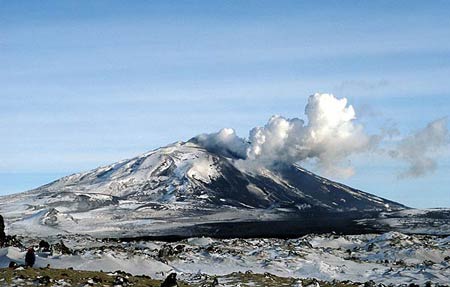
Hekla in eruption in March 2000 with the large black lava flow in the foreground from that eruption.
1491-m-high Hekla is one of Iceland's most prominent, most known and active volcanoes. It has frequent eruptions that start with an explosive onset producing eruption plumes, then lava fountains and culminate in large lava flows. Most of the volcano's flanks are covered by extensive lava flows from historical eruptions, dating back to 1104 AD.
[smaller] [larger]
Hekla volcano eruptions: 1104 (large, Plinian eruption), 1158, 1206, 1222, 1300, 1341, 1389, 1440(?), 1510, 1554, 1597, 1636-37, 1693, 1725, 1766-68, 1845-46, 1878, 1913, 1947-48, 1970, 1980, 1981, 1991, 2000
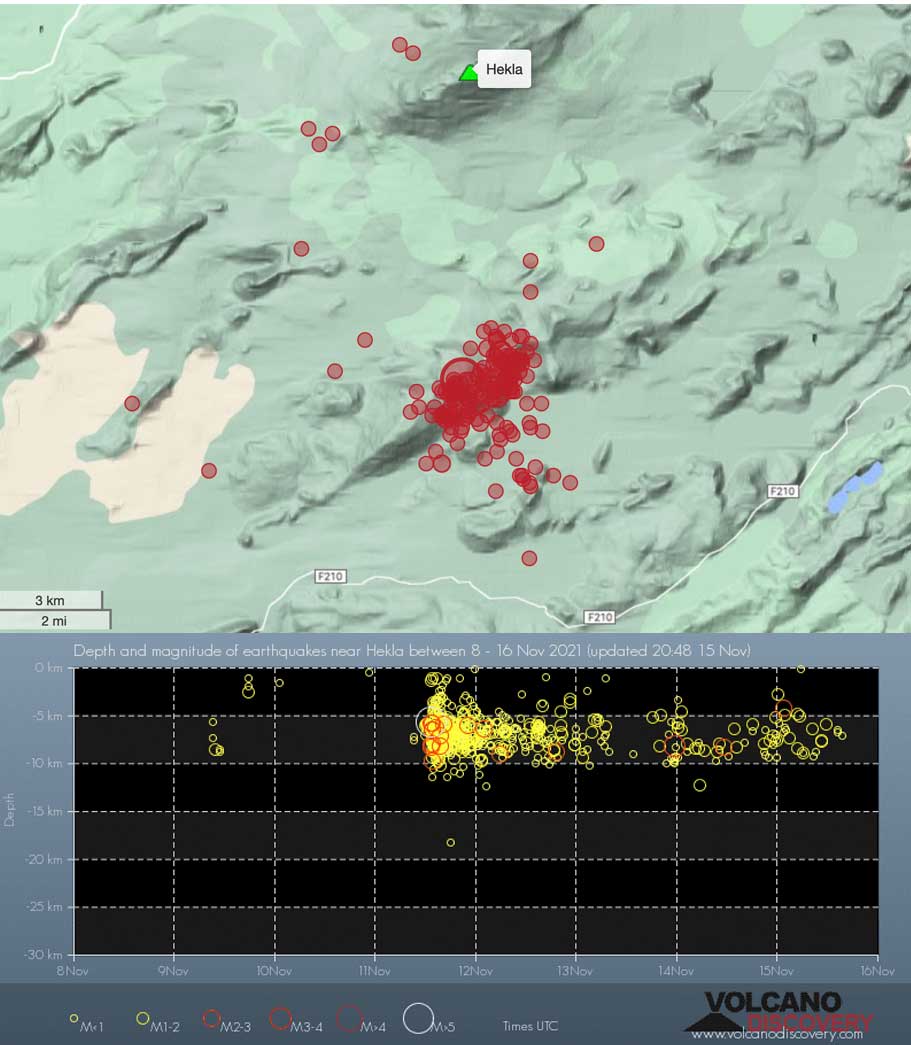
Latest nearby earthquakes
| Time | Mag. / Depth | Distance / Location | |||
| Apr 18, 03:40 pm (Reykjavik) | 1.1 0 km | 27 km (17 mi) to the W |  13.4 km S of Árnes 13.4 km S of Árnes | Info | |
| Sunday, April 14, 2024 GMT (1 quake) | |||||
| Apr 14, 08:40 pm (Reykjavik) | 1.5 7.9 km | 16 km (9.8 mi) to the S | 9.2 km SW of Vatnafjöll | Info | |
| Tuesday, April 23, 2024 GMT (1 quake) | |||||
| Apr 23, 06:46 pm (Reykjavik) | 1.0 1.1 km | 17 km (10.7 mi) to the E | Iceland: 11.8 km NNW of Álftavatn | Info | |
| Monday, April 22, 2024 GMT (1 quake) | |||||
| Apr 22, 02:14 am (Reykjavik) | 1.0 2 km | 20 km (13 mi) to the E | 10.5 km WSW of Landmannalaugar | Info | |
| Sunday, April 21, 2024 GMT (1 quake) | |||||
| Apr 21, 07:31 am (Reykjavik) | 1.0 0.1 km | 20 km (12 mi) to the E | Iceland: 10.4 km WSW of Landmannalaugar | Info | |
| Wednesday, April 17, 2024 GMT (1 quake) | |||||
| Apr 17, 03:51 pm (Reykjavik) | 0.9 1.6 km | 22 km (14 mi) to the N | Iceland: 7.9 km N of Búrfellsstöð | Info | |
Background
Hekla is located near the southern end of the eastern rift zone. It sits on a rift-transform junction, and has produced basaltic andesites, in contrast to the tholeiitic basalts typical of Icelandic rift zone volcanoes. Hekla's tephras are generally rich in flourine, which is very hazardous to grazing animals.The elongated shape of the volcano is caused by a 5.5-km-long fissure, Heklugjá, that cuts across the volcano and is often active along its full length during major eruptions. Repeated such eruptions, oblique to most rifting structures in the eastern volcanic zone, have created Hekla's elongated ENE-WSW profile.
Frequent large explosive eruptions during historical times have deposited tephra throughout Iceland and provide important time markers that can be used to date eruptions from other volcanoes in Iceland.
Hekla Volcano Photos
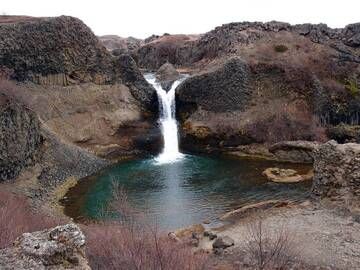
Gjárfoss waterfall in the basaltic gorge of Gjáin near Hekla volcano, Iceland (Photo: Janka)
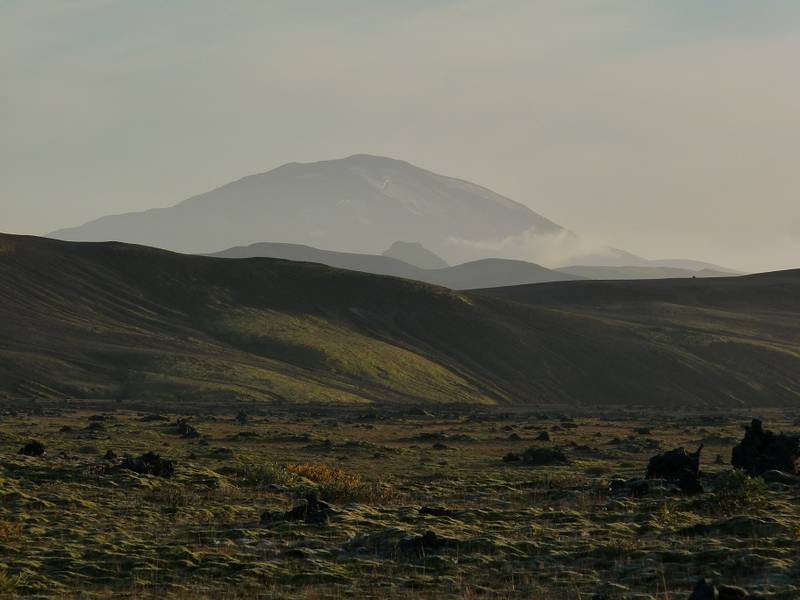
The contours of Mount Hekla materialising in the hazy evening light behind a volcanic ridge. Near Hrauneyjalón, southern boundary of the Icelandic Highlands - 13 Septmeb...
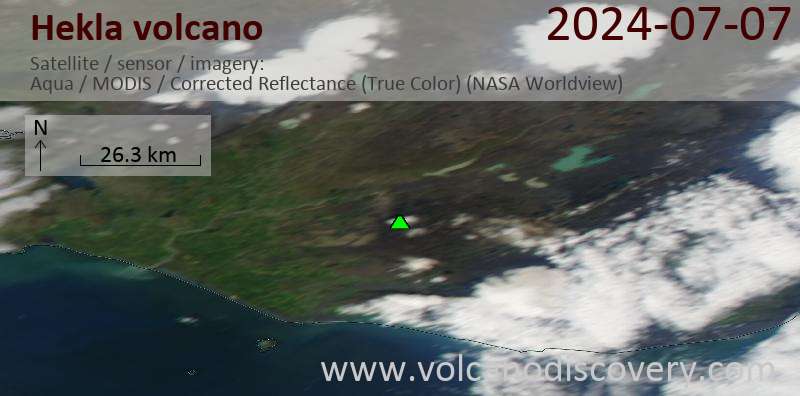
Latest satellite images