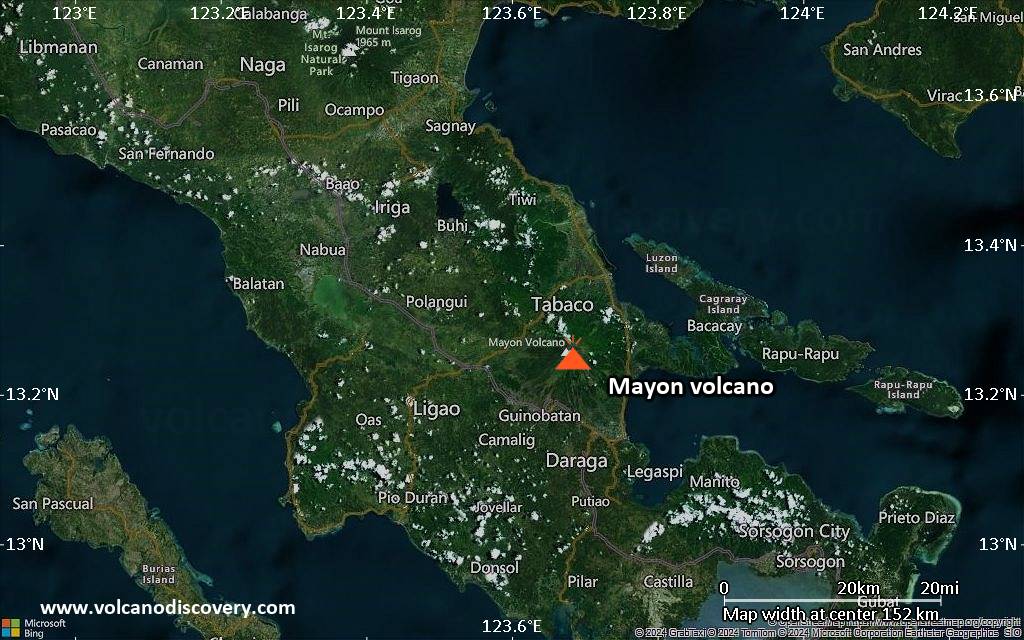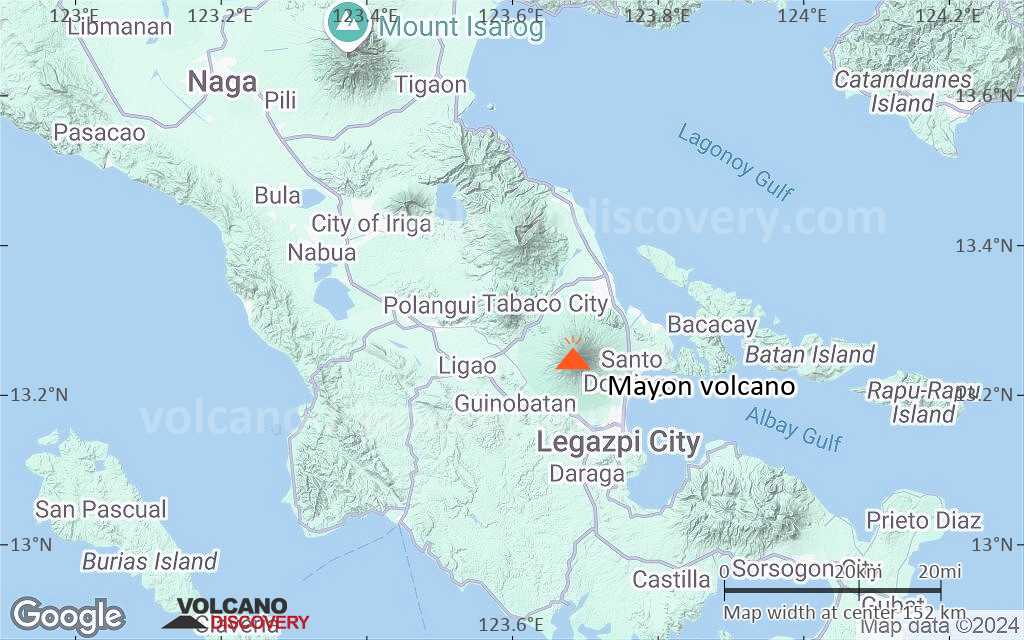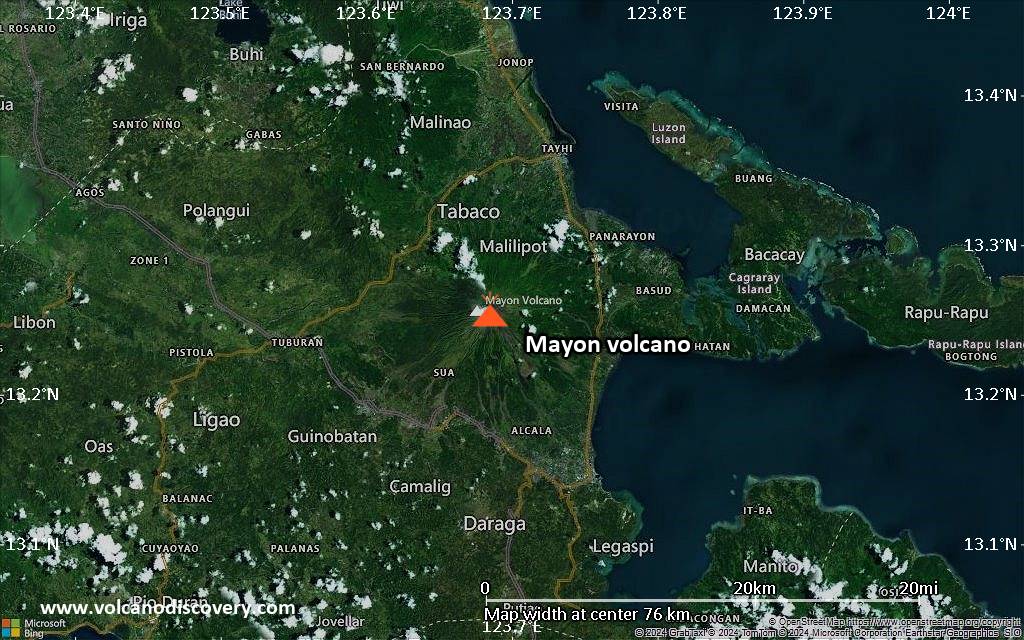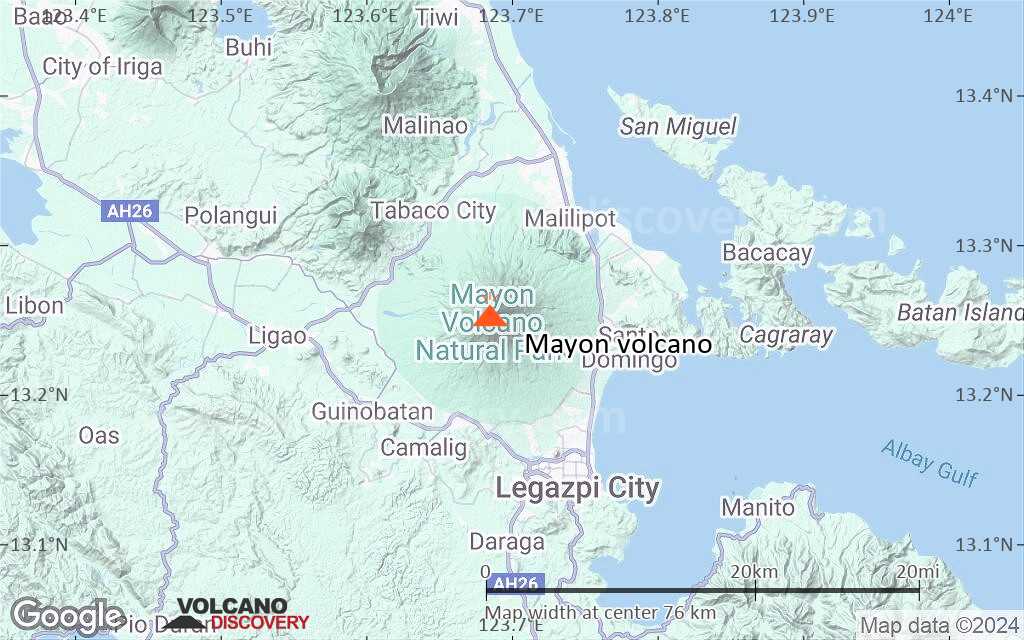


Mayon Volcano


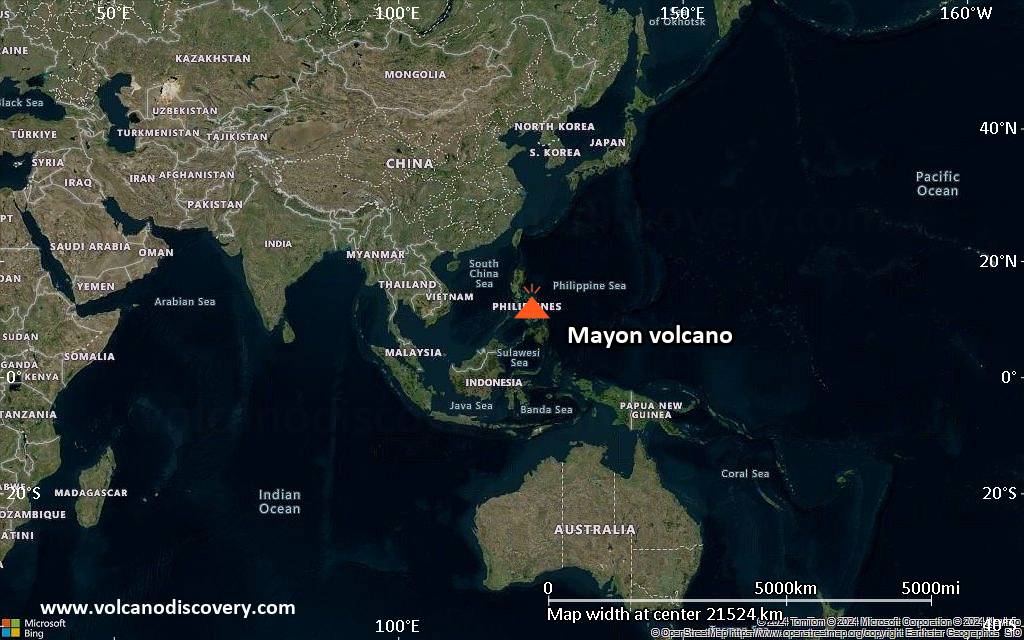
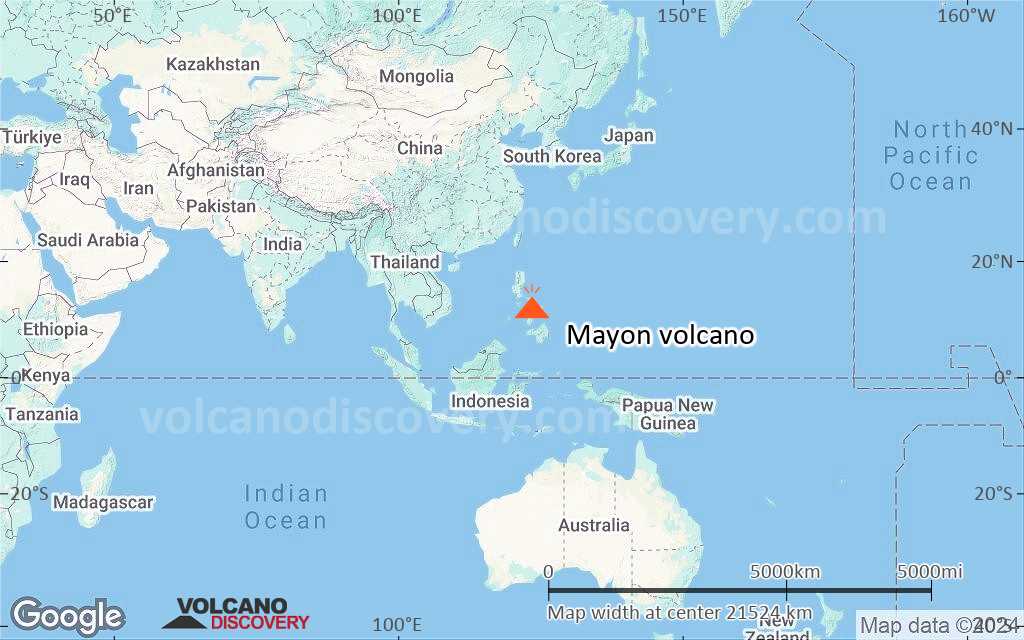
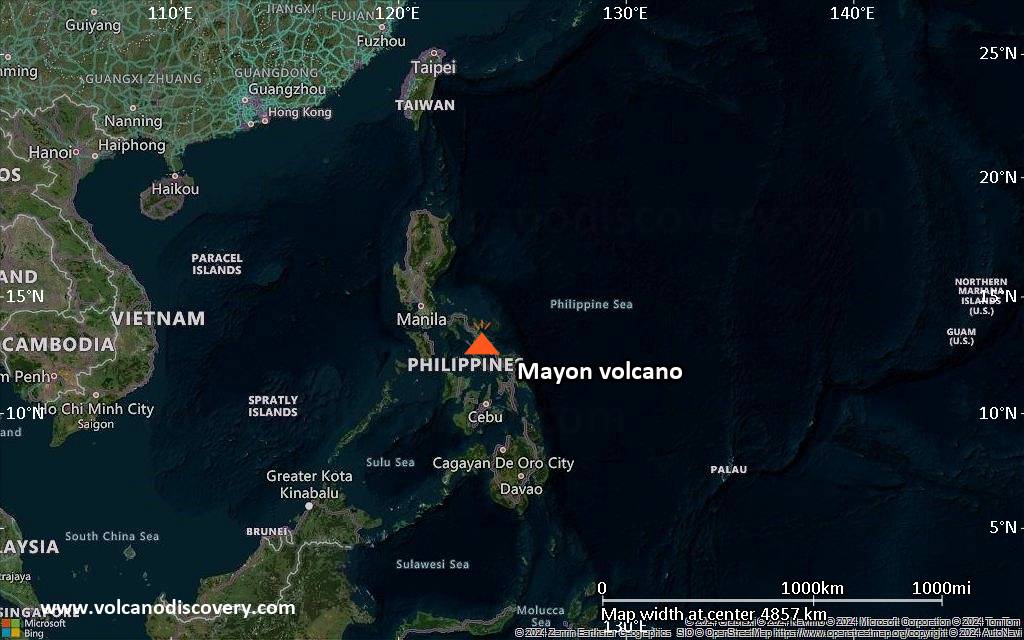
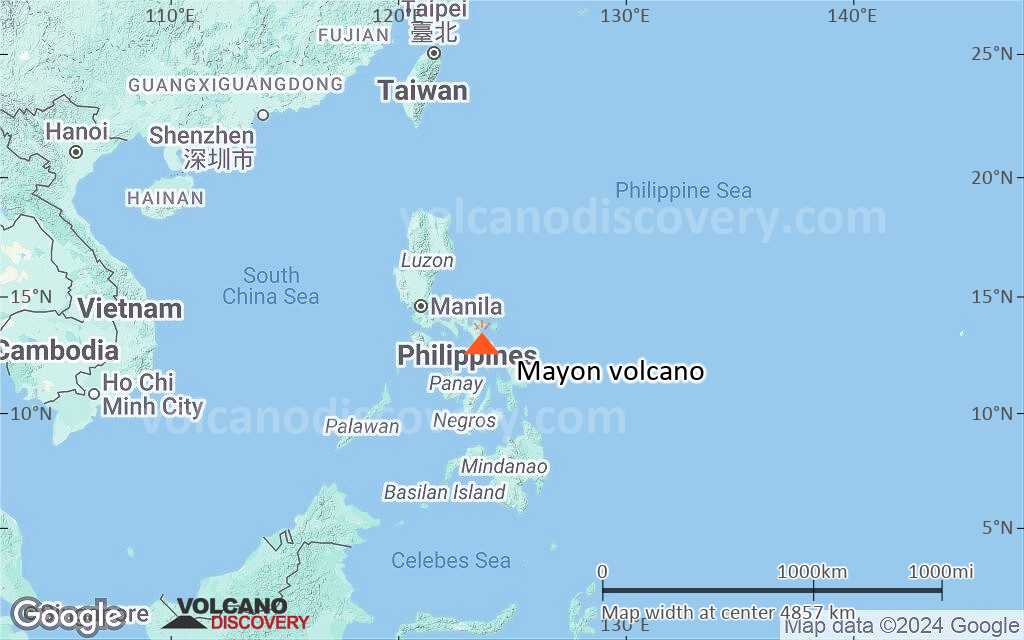
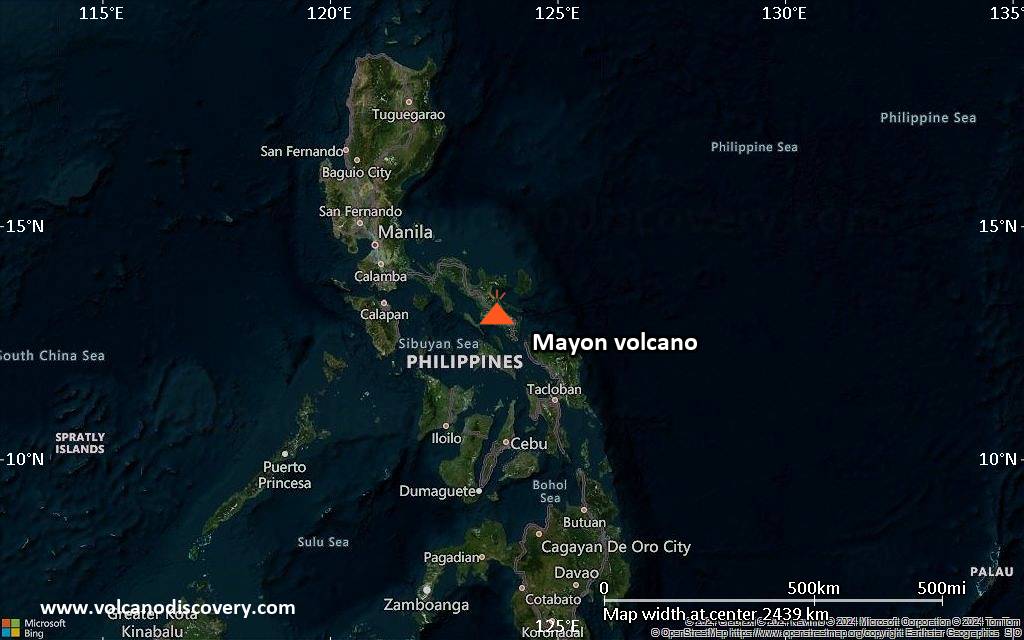
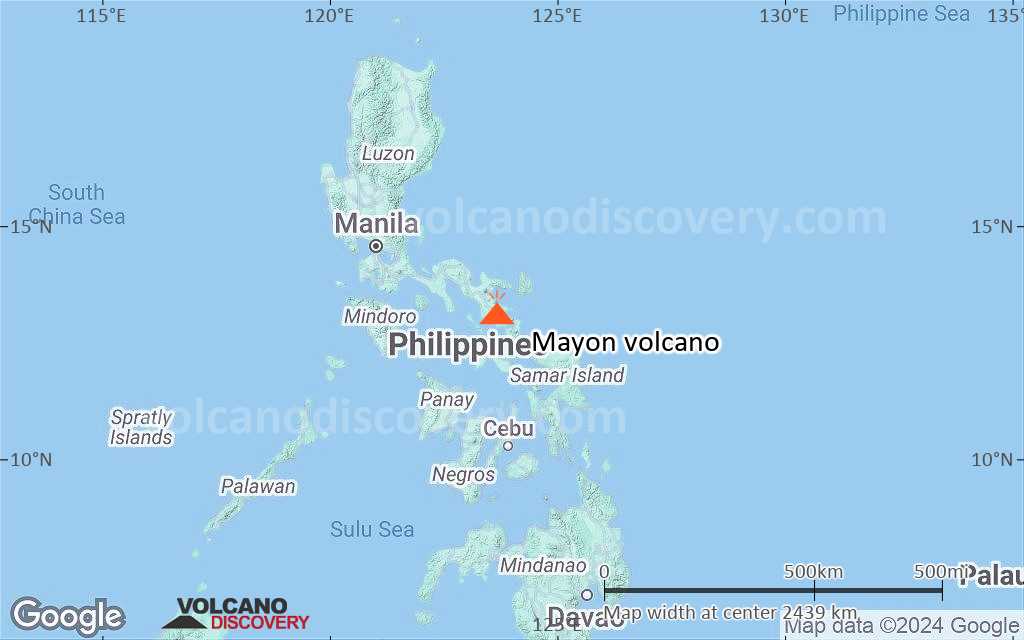
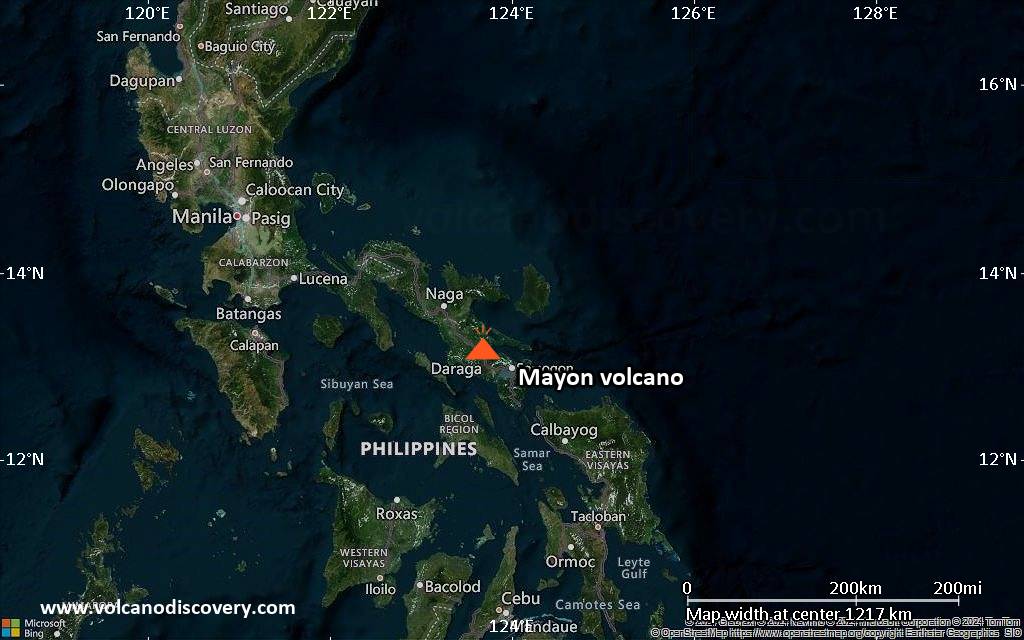
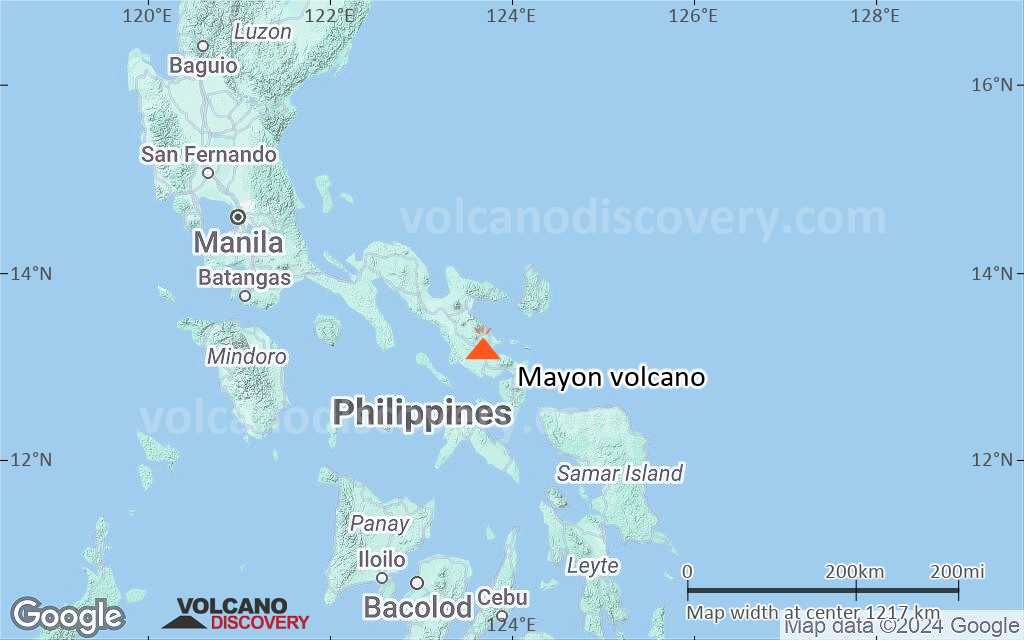
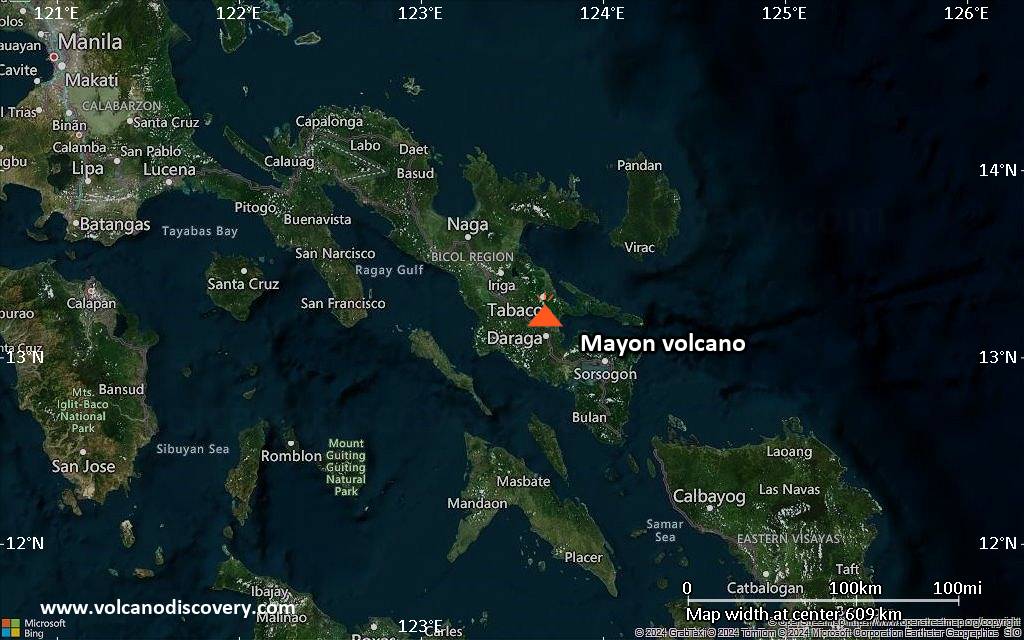
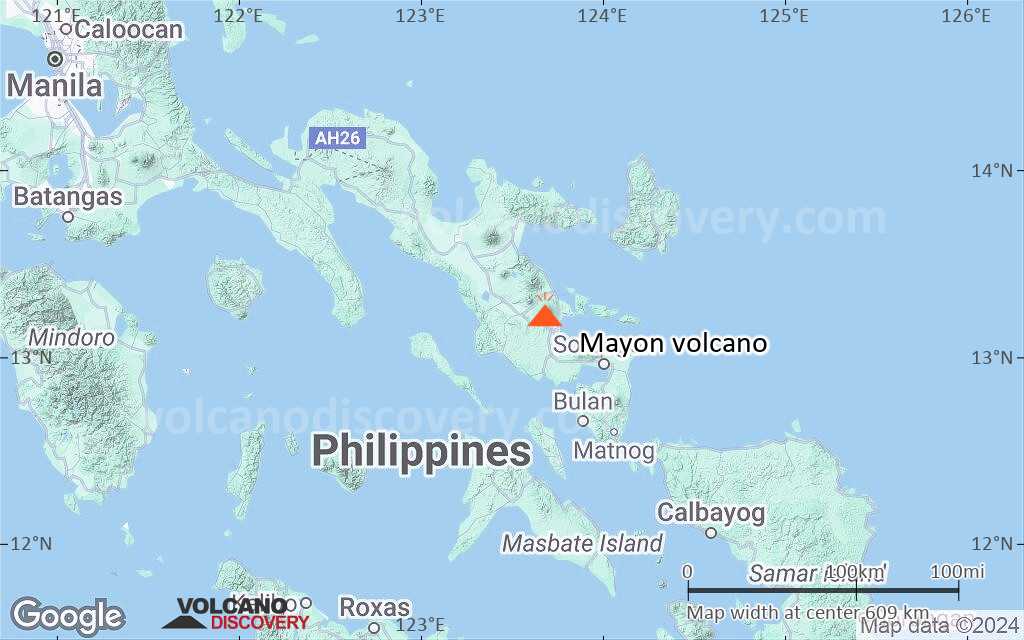
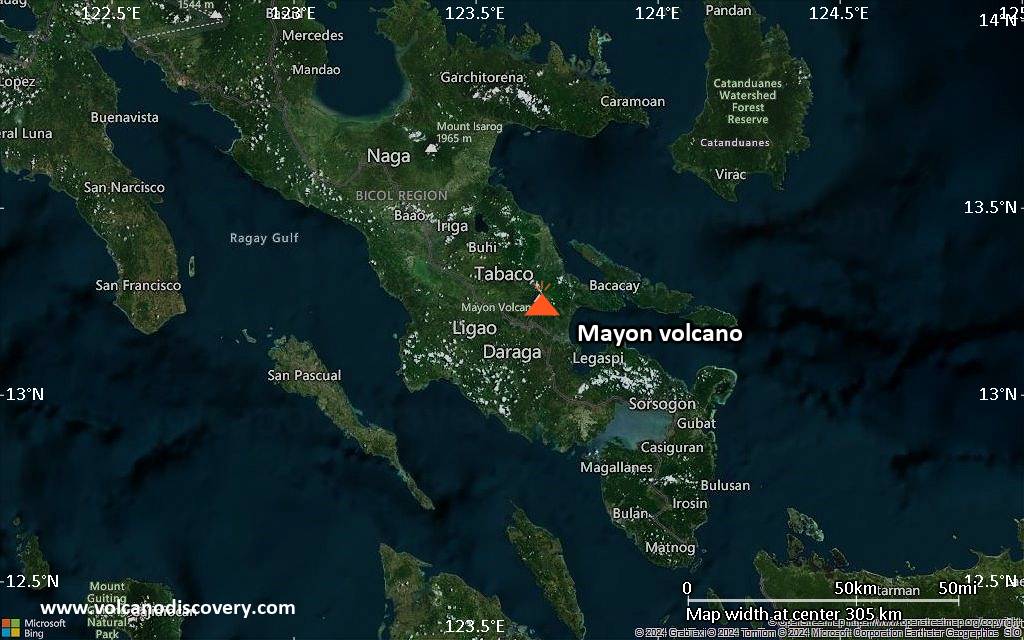
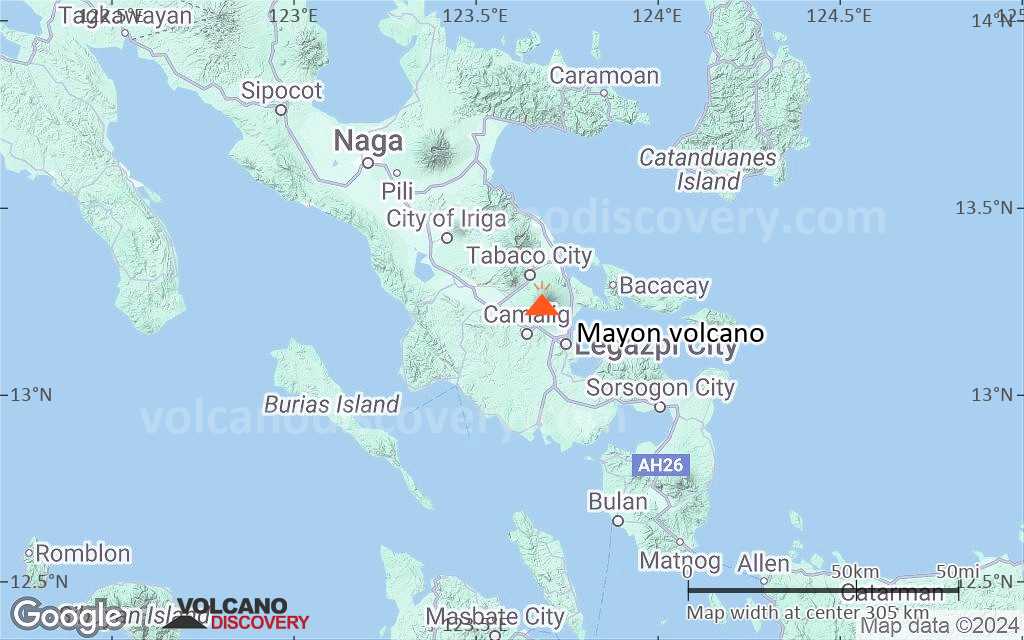
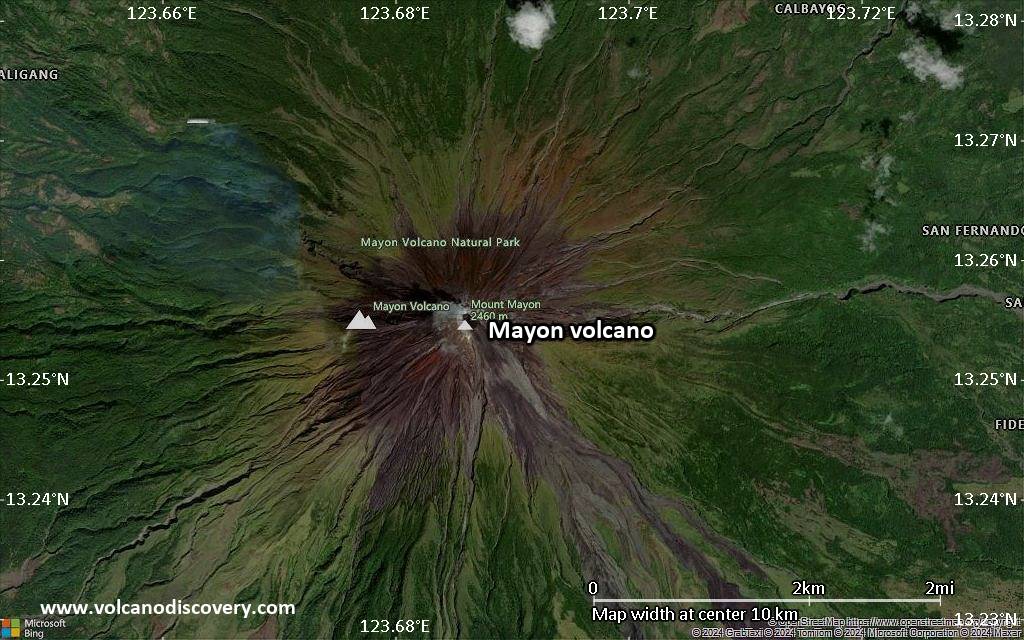
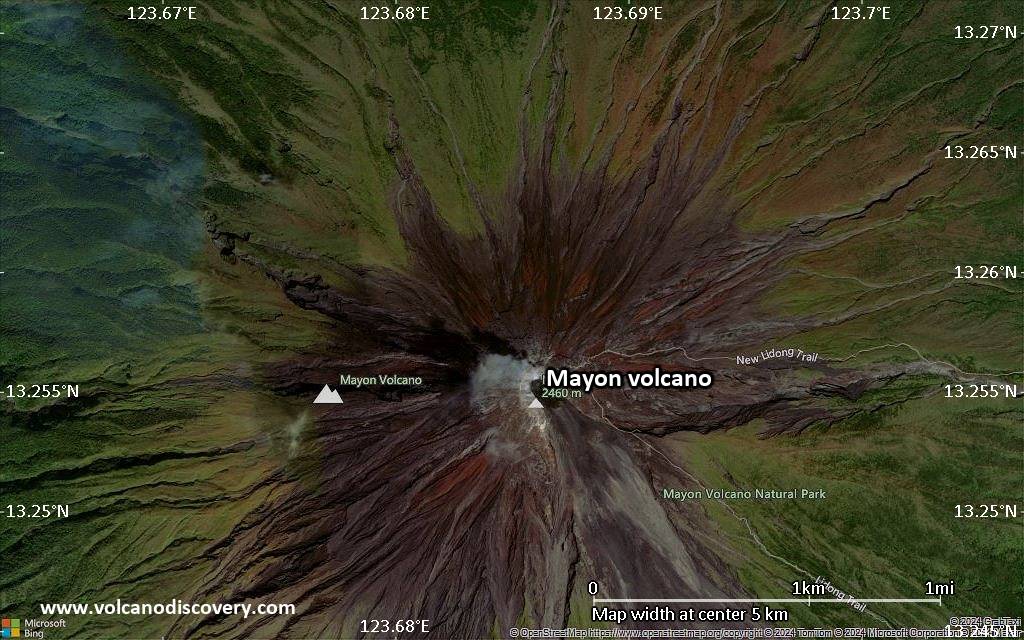
Mayon, the most famous of the active volcanoes of the Philippines, is a perfect stratovolcano rising to 2462 m on Luzon Island. It erupts very frequently.
Mayon volcano eruptions: 1616, 1766, 1800, 1811(?), 1814, 1827, 1834, 1839, 1845, 1846, 1851, 1853, 1855, 1857, 1858, 1859, 1860, 1861, 1862, 1863(?), 1868, 1871-72, 1872, 1873, 1876, 1876, 1881-82, 1885, 1886-87, 1888, 1890, 1891-92, 1893, 1895, 1896, 1897, 1900, 1902(?), 1928, 1928, 1939, 1941, 1943, 1947, 1968, 1978, 1984, 1993, 1999-2000, 2001, 2002, 2003, 2003(?), 2004, 2006, 2009, 2013, 2018
Latest nearby earthquakes
| Date and Time | Mag / Depth | Distance / Location | |||
|---|---|---|---|---|---|
Background
Mayon is the archetype of a symmetrical stratovolcano and one of the world most active ones. It has frequent eruptions producing pyroclastic flows, mud flows and ash falls that repeatedly triggered large-scale evacuations. Mayon's most violent eruption, in 1814, killed more than 1200 people and devastated several towns.the volcano rises 2462 m above the Albay Gulf and has very steep upper slopes averaging 35-40 degrees capped by a small summit crater.
Historical records of eruptions date back to 1616 and range from strombolian to basaltic plinian, with cyclical activity beginning with basaltic eruptions, followed by longer term andesitic lava flows. Eruptions occur predominately from the central conduit and have also produced lava flows that travel far down the flanks. Pyroclastic flows and mudflows have commonly swept down many of the approximately 40 ravines that radiate from the summit and have often devastated populated lowland areas.
---
Source: adapted from GVP / Smithsonian Institution
Mayon Volcano Photos


Significant volcanic eruptions: Mayon volcano
Additionally, there are 4 uncertain or discredited eruptions from Mayon volcano.
| Date | Note | VEI | Deaths | Damage | |
|---|---|---|---|---|---|
Historical obs./docs. | 2 | ||||
Historical obs./docs. | 2 | ||||
Historical obs./docs. | 0 | ||||
| Summit crater Historical obs./docs. | 2 | ||||
| 2018 Jan 13 (eruption | Historical obs./docs. | 2 | moderate | Info | |
| Summit crater Historical obs./docs. | 0 | ||||
| Summit crater Historical obs./docs. | 2 | ||||
| 2013 May 7 (eruption | Historical obs./docs. | 0 | 5 | Info | |
Historical obs./docs. | 2 | ||||
Historical obs./docs. | 1 | ||||
| 2006 Nov 30 (eruption | Historical obs./docs. | 1 | 1,266 | light | Info |
Historical obs./docs. | 1 | ||||
Historical obs./docs. | 1 | ||||
Historical obs./docs. | 0 | ||||
Historical obs./docs. | 1 | ||||
?? | Uncertain Eruption | ? | |||
Historical obs./docs. | 2 | ||||
Historical obs./docs. | 1 | ||||
Historical obs./docs. | 3 | ||||
Historical obs./docs. | 2 | ||||
Historical obs./docs. | 3 | ||||
Mayon Volcano FAQ
+When was the last eruption of Mayon volcano?
The last confirmed eruption of Mayon occurred in 2024.
+How often does Mayon volcano erupt?
Since 1616 AD, Mayon volcano has had at least 63 historically documented eruptions. This means that it erupts on average every 6.5 years.
+How active is Mayon volcano at present?
Mayon volcano is relatively active: Since 1900, it has had 30 eruptions, and been active during 30 years out of 126 as of now. This means, Mayon has been in eruption one in 4.2 years on average. The last eruption was in 2024 and ended 16 months ago.
+When was the largest eruption of Mayon volcano?
The largest eruption of Mayon volcano in historic times occurred in 1897. It ranks as a sub-plinian eruption with a magnitude 4 on the VEI (Volcanic Explosivity Index) scale.
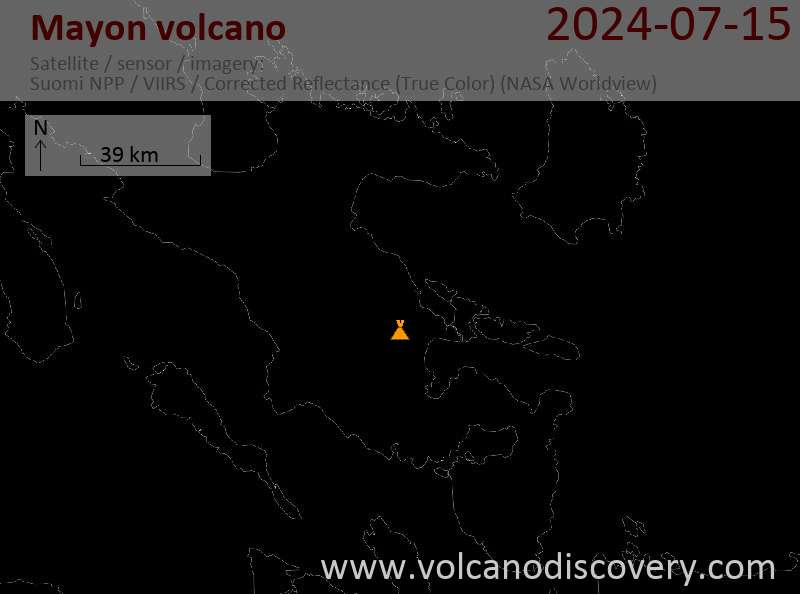
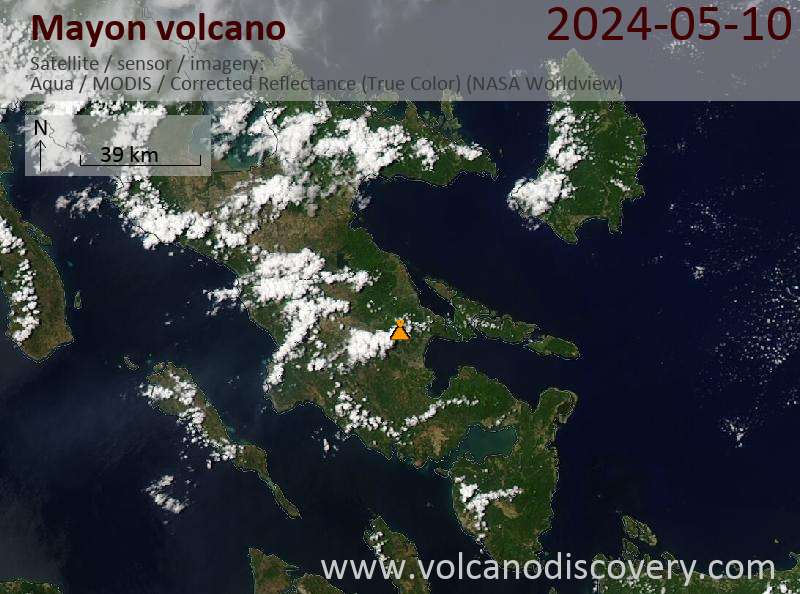
Latest satellite images
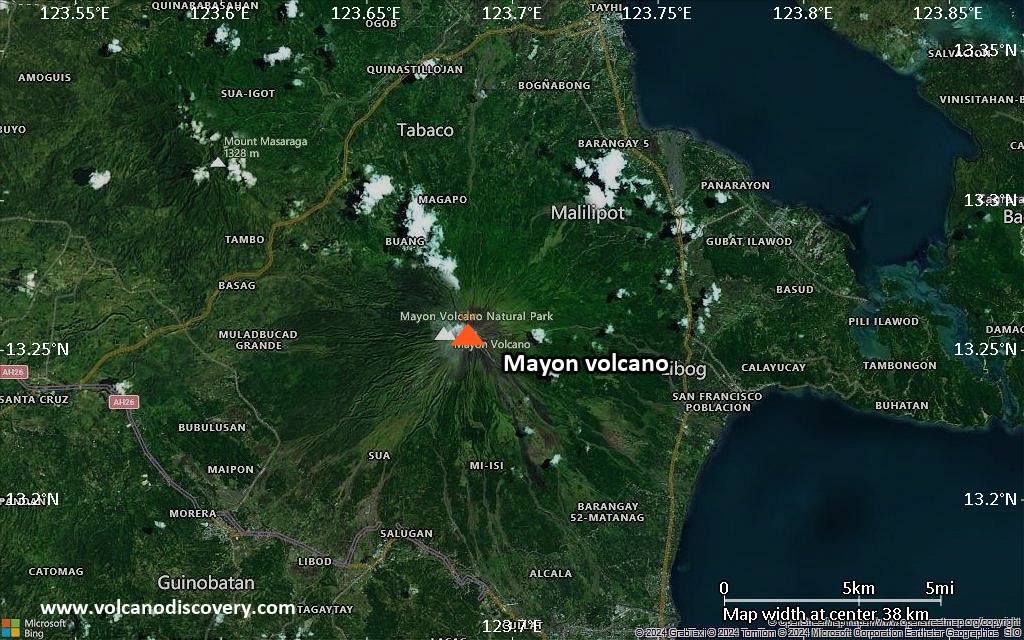
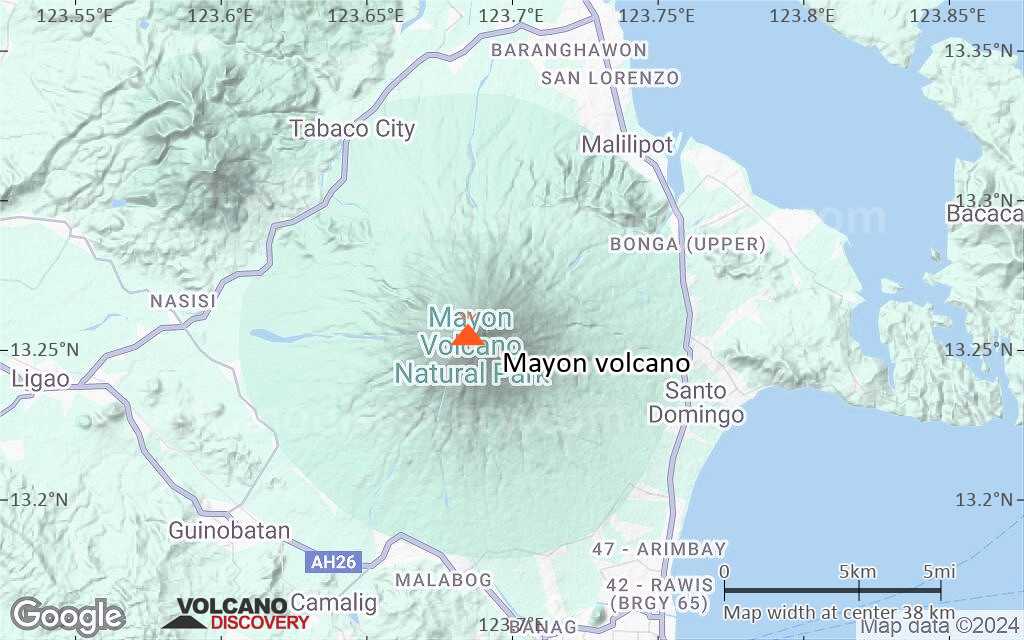
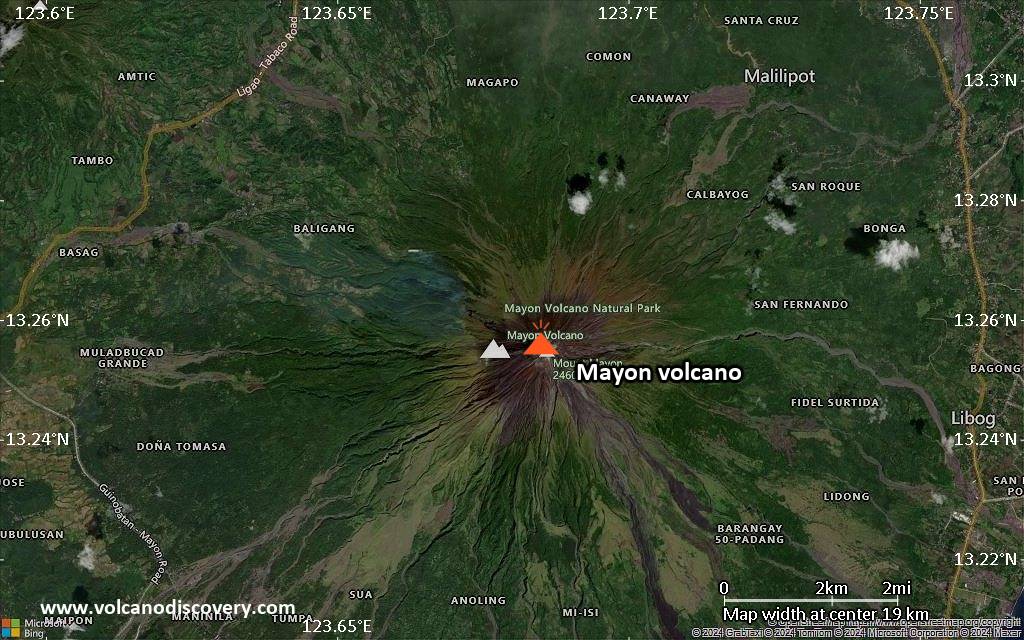
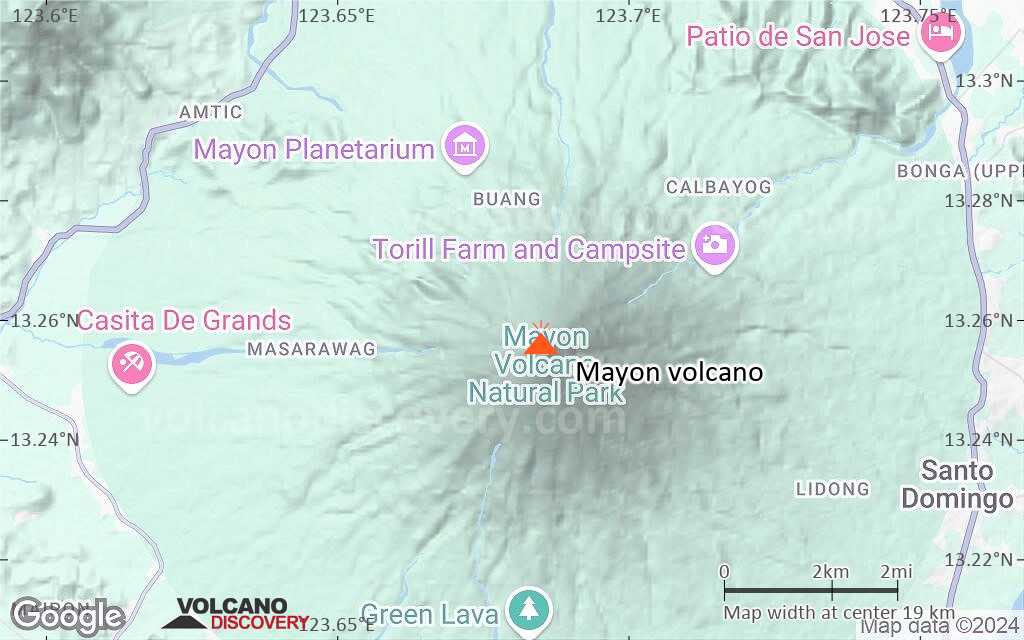
Mayon Volcano Maps