Latest news:Friday, Jun 07, 2013
During a visit to the summit craters today, we could observe a new hot fumarole in the western pit of the Bocca Nuova, increased bluish degassing from a vent in the saddle between the old and new SE crater and hear deep-seated explosions inside the NE crater. ...
[more]
Thursday, Jun 06, 2013
When observed during 3-6 June, the volcano was at normal levels of activity which had not changed significantly since our last visit 2 weeks ago. On the crater terrace, about 7 active vents were present, with eruptions every about 15-20 minutes: the two vents in the NW crater sometimes erupted simultaneously, one with low ejections of blocks, scoria and ash, the other with loud turbine-like jets of gas and lava fragments that often reached about 250 m height. The hornito at the NW crater rim was not seen erupting. ...
[more]
Volcanoes of Europe (excl. Iceland and Jan Mayen)- volcanoes of Iceland- Jan Mayen and other volcanoes in the N Atlantik
Italy (12 volcanoes): Amiata | Vulsini | Monte Albano | Campi Flegrei (Phlegrean Fields) | Vesuvius | Ischia | Etna | Campi Flegrei Mar Sicilia | Pantelleria
Turkey (18 volcanoes): Akyarlar | Kenger | Sandal | Kula | Karadağ | Karapinar | Hasan Dagi | Göllü Dağ | Acigöl-Nevsehir | Erciyes Dağ | Koruhüyüğü | Karaca Dağ | Nemrut Dağ | Süphan Dağ | Kars | Girekol | Tendürek Dağ | Ararat
Portugal (15 volcanoes):
- Azores: Corvo | Flores | Graciosa | Terceira | San Jorge | Fayal | Pico | Don Joao de Castro Bank | Sete Cidades | Fajã de Cima | Picos Volcanic System | Agua de Pau | Furnas | Monaco Bank
- Madeira: Madeira
Spain (8 volcanoes):
- Canary Islands: Lanzarote | Fuerteventura | Gran Canaria | Tenerife | La Gomera | La Palma | El Hierro
Olot Field
This region is marked by traditions of record-keeping that go back thousands of years and by generations of historians devoted to mining those records. It is often called the "Cradle of Western Civilization," but it is also very much the cradle of volcanology. The earliest known documentation of volcanism is an Anatolian wall painting of a nearby cinder cone eruption around 6200 BC; the vigorous record of Etna goes back to 1500 BC; and the catastrophic eruption of Vesuvius in 79 AD, with the burial of Pompeii, continues to serve today as an object lesson in volcanism. The region has given us the first documented "new mountain," Monte Nuovo, in 1538, the first "new island" at Santorini, in 197 BC, and the word "volcano" itself (derived from Vulcan, the Roman god of fire). (Citation from the Global Volcanism Program (Smithsonian Institution):)
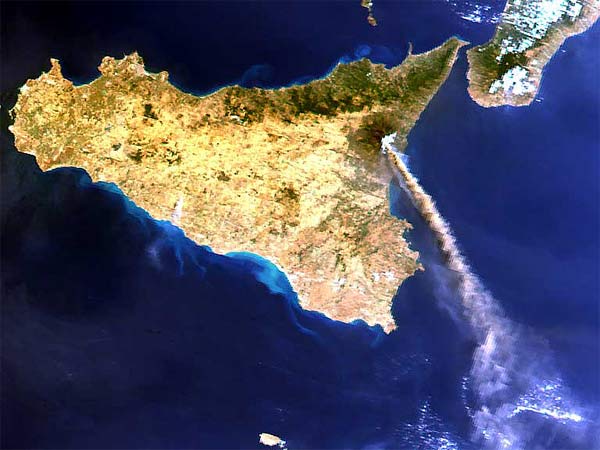
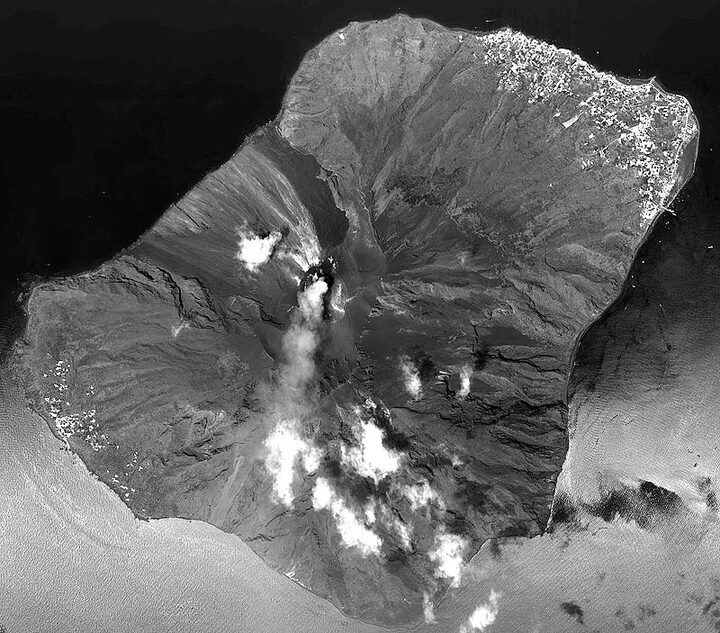
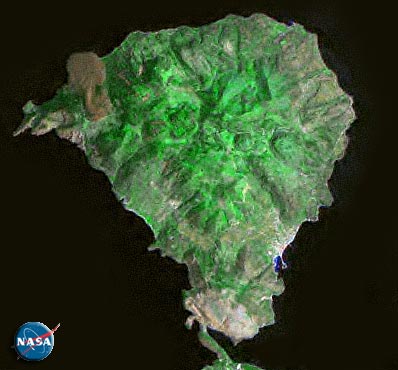
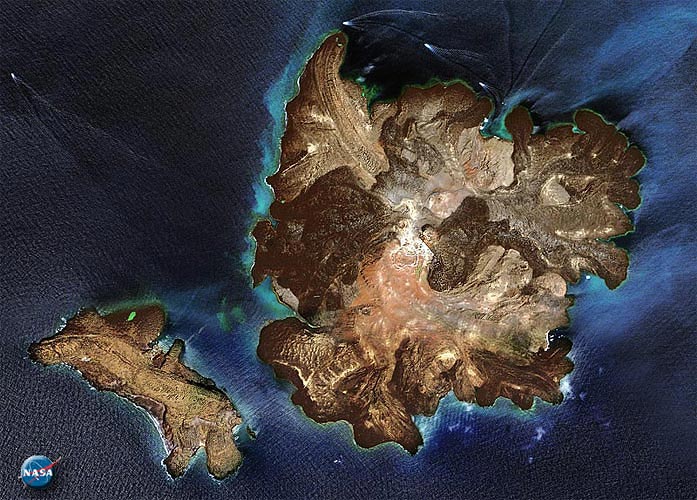
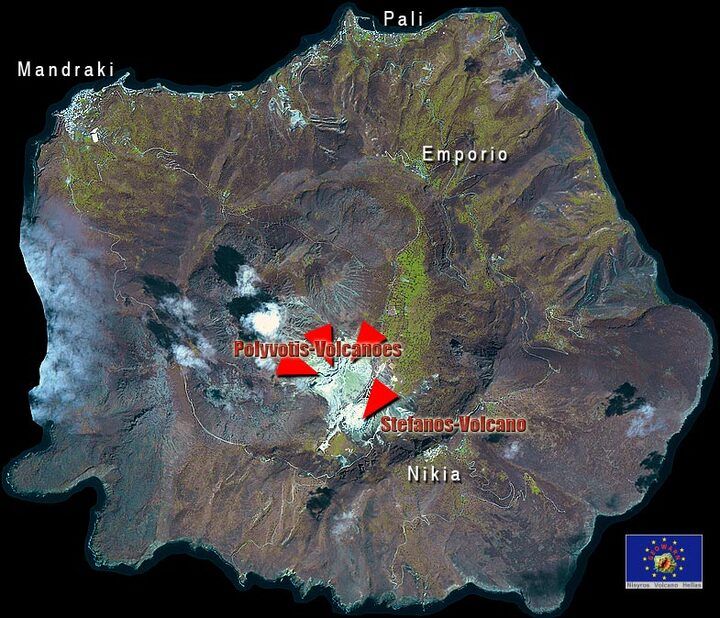
Satellite images of volcanoes in Southern Europe
|
| ||||||||||||||||